The Surprising Truth About Fear: What Your Body Is Really Telling You”

You’ve probably heard it before: “Fear is a liar.” But here’s the truth—fear isn’t lying to you. In fact, fear is one of the most honest messengers you’ll ever encounter. It’s like a built-in biological fact checker.

Maybe you’ve been the classic overachiever—Type A, driven, performance-oriented, always proving yourself. You might have carried the weight of legitimacy issues, constantly striving to measure up. But as healing comes, something softens. You still set goals, but now it’s more about loving the dream than obsessing over the outcome. If they happen—wonderful. If not—you’re still at peace.
Yet even as a recovering overachiever, you may still get frustrated when you feel fear. It’s easy to get irritated with yourself when your body reacts in ways your mind doesn’t agree with. And you don’t have to be Type A to know this struggle—anyone can get caught in the tension of mind vs. body.
Our culture often shouts: “Faith over fear! Conquer your fears! Push past the pain!” And yes, there’s power in rewriting negative narratives and building resilience. But there’s another side we rarely talk about: the wisdom of your biology.
When Fear Shows Up in Your Body
Maybe you’ve had moments when your mind knew the truth, but your body refused to calm down. You tell yourself, “It’s okay, there’s no real danger.” Yet your hands still shake, your stomach churns, or your chest tightens.
No amount of logic seems to stop it, because your body is wired to respond at a cellular level. It’s not weakness. It’s not a lack of faith. It’s your design doing its job.
You Can’t Minister Out Biology
You can’t cast out butterflies in your stomach. You can’t pray away weak knees or trembling hands.
Yes, Scripture tells you over and over, “Do not fear.” But that doesn’t mean your cells suddenly stop releasing cortisol and adrenaline. When you walk through grief, loss, or uncertainty, your body responds in very real ways. That’s not failure—it’s human.
The Truth About Fear
Here’s the thing:
Would you fault yourself for weak knees standing on the edge of a cliff? Of course not. That response has nothing to do with faith and everything to do with your body’s awareness of danger.
Would you call yourself weak for screaming on a roller coaster? No—that’s just adrenaline at work.
Unless you’ve had years of specialized training (like the military), your body will respond in normal, human ways to perceived danger. Fear isn’t lying. It’s telling you something feels unsafe—even if your logical mind knows otherwise.
Remember—faith isn’t measured by whether your stomach fills with nervous butterflies. It’s measured by the steps you choose to take forward.
Respecting the Design
You live in a world where unnerving things happen daily—both globally and personally. And if you’re told “fear is a liar,” you may end up shaming yourself (or your kids) when anxiety shows up. But what if fear isn’t the problem?
Maybe the real challenge is to respect your body’s design. Acknowledge the response. Let it process. And then move forward.
For some, that looks like:
going for a run
pouring thoughts onto paper in a journal
decluttering the house in a burst of energy
smashing plates behind a grocery store (yes, really)
Whatever helps your body release what it’s holding—do that.
Final Thought
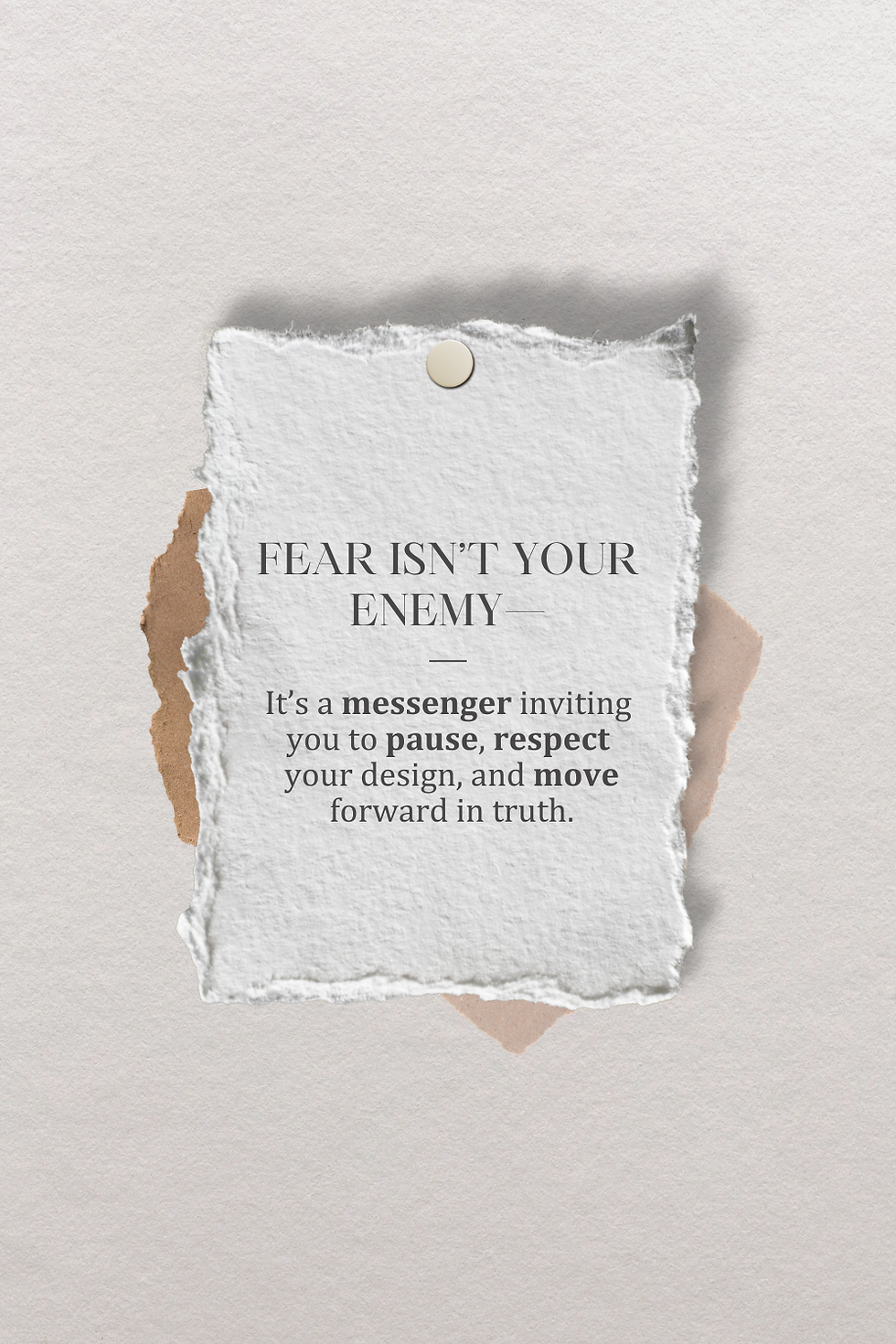
Fear isn’t your enemy. It’s not a liar. It’s a messenger. A signal. An invitation to pause, respect your design, and then choose how to move forward.
And here’s the freeing truth: your faith is not measured by your shaky hands or racing heart. You can trust God completely and still have a body that trembles when the pressure hits. That’s not failure—it’s design.
So the next time fear rises up, don’t shame yourself. Respect your body. Let it do what it was created to do. And then step forward in truth.



Comments